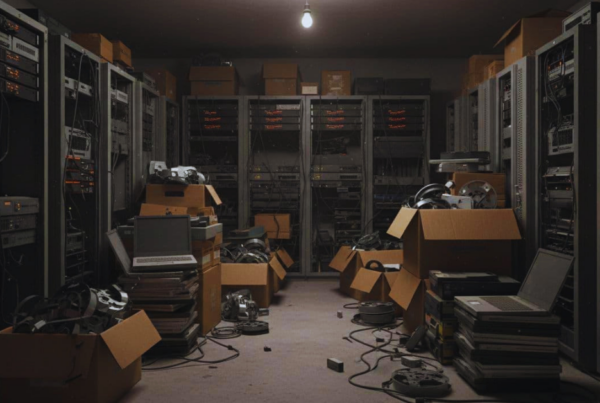

If your facility only retires devices during a big purge, you’ve probably seen the cracks. A few “mystery” laptops show up late. Old patient monitors sit in a closet for months. Someone rushes data handling because the loading dock pickup window is tight. Meanwhile, storage piles grow until they become a safety and security problem.
A year-round medical device disposal program fixes that by turning retirement into a normal workflow, not a fire drill. In practice, that means a simple policy everyone can follow, consistent tracking at the serial-number level, and documented data destruction that supports HIPAA e-waste compliance in Washington expectations. It should also end with proof you can file, like asset reports and a certificate of destruction.
This guide uses a local lens for hospital IT asset disposal Seattle area teams in Seattle, Bellevue, and Tacoma, plus Everett, Silverdale, and Olympia.
Start with a device lifecycle policy that removes guesswork for every department
A disposal program succeeds or fails on one thing: whether staff can act without improvising. Your policy should read like a playbook. It needs to cover the full path from purchase to retirement, define who owns which steps, and set default actions that work in most cases.
HIPAA also pushes you here. The HIPAA Security Rule calls for policies and procedures for disposal of electronic media (see 45 CFR 164.310(d)(2)). In plain terms, you need a repeatable way to make sure ePHI is not readable after a device leaves service.
A practical lifecycle flow can be simple:
- Intake (new or transferred): tag it, record who owns it, note whether it can store data.
- In service: track moves, repairs, and user changes.
- Secure storage (pending pickup): lock it up, log it, restrict access.
- Retirement: sanitize or destroy data, then reuse, recycle, or scrap.
Remember that electronics can include regulated components even when they feel “non-clinical.” Batteries, circuit boards, and older display types can trigger special handling and recycler requirements. That’s another reason a year-round approach helps, because you can stage and ship correctly instead of rushing.
Training matters, too. Plan for onboarding plus at least annual refreshers. Keep it short, focus on what staff actually touch: what goes in the holding area, who signs, and what never leaves a unit without logging.
Define what counts as a “device”, and sort it by risk before it ever hits a cart
Many items beyond laptops can touch ePHI. Think patient monitors, imaging workstations, nurse station PCs, tablets, barcode scanners, VoIP phones, and even “dumb” gear that still holds patient labels or configuration logs.
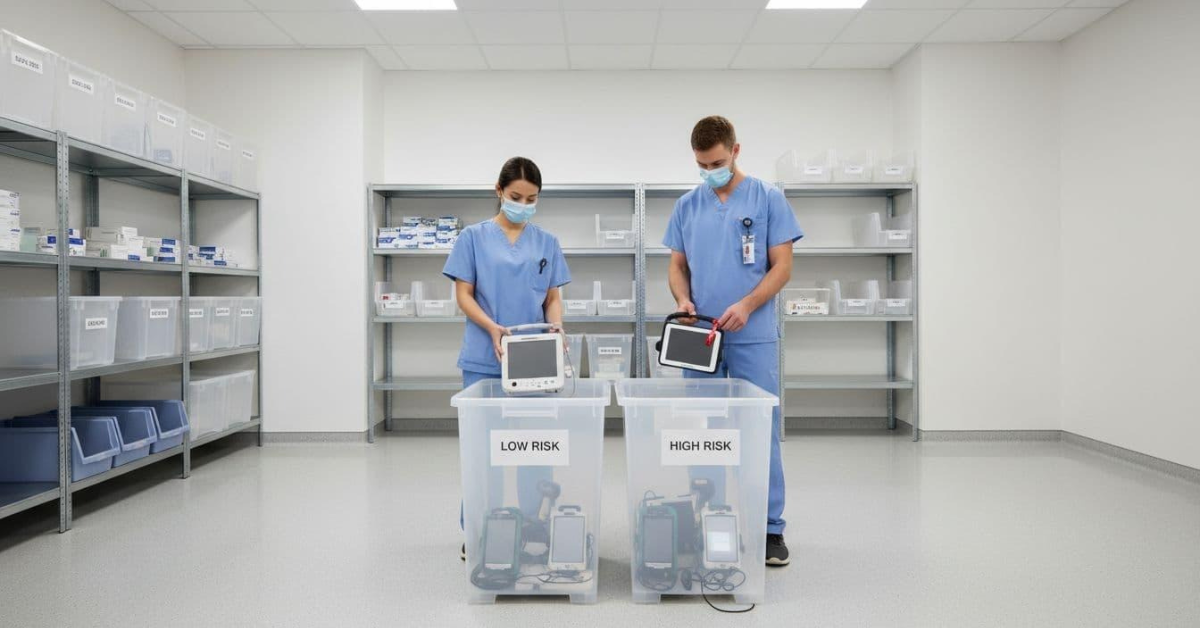
Before anything rolls to staging, sort it by risk using three simple questions:
| Quick risk test | If yes, treat as higher risk because… |
| Does it store data? | It may hold ePHI on a drive, flash memory, or internal module. |
| Does it connect to the network? |
It may cache data, credentials, or logs. |
| Could it carry
patient identifiers (labels, stickers, wristband data)? |
It can still create a reportable exposure. |
Also coordinate with infection control for devices coming out of clinical areas. Decontamination and data handling should work together, not collide in a hallway handoff. For a broader view of common pitfalls and safe handling practices, see this HIPAA compliant equipment disposal guide.
Set clear retirement triggers, and a safe holding process while you wait for pickup
Retirement shouldn’t rely on someone’s memory. Use triggers people recognize: end of vendor support, repair cost too high, failed QA, recall notices, replacement projects, and confirmed security risk.
Then build a holding process that’s boring on purpose. Locked cages or rooms, tamper-evident tags, limited access, and basic logging (date, handler, department, count) go a long way.
The biggest “hidden risk” in device disposal is idle time. The longer devices sit, the harder chain of custody becomes.
Year-round scheduled pickups prevent overflow and reduce the temptation to park devices in closets, hallways, or unsecured offices.
Make asset tracking and data destruction the backbone of your year-round workflow
A good program feels like a conveyor belt: identify, log, stage, transfer, destroy or sanitize, then report. The goal is simple. At any moment, you should be able to answer, “Where is this device, and who touched it last?”
That’s the heart of hospital IT asset disposal Seattle teams need when auditors, security, and compliance ask for defensible proof.
HIPAA does not mandate one destruction method for every device. Instead, it expects you to choose methods that make ePHI unrecoverable, based on risk. In practice, that often aligns with the “clear, purge, destroy” concept used across security guidance: overwrite for lower-risk reuse cases, stronger methods like degaussing for certain media, and physical destruction when policy or risk requires it. HIPAA penalties can be significant, so it’s smart to design the workflow so it doesn’t depend on heroics.

Track the basics that auditors and security teams actually ask for
Capture what you’ll need later, not what’s nice to have. Most teams do well with: asset tag, serial number, model, department owner, last known location, retirement reason, date removed from service, whether it’s data-bearing, and handler sign-offs at each handoff.
Spreadsheets can work during a pilot. However, as volumes grow, an ITAM or CMMS tool reduces typos and “lost context.” Mixed loads are common, too, like infusion pump docks plus standard PCs. Your process should handle both without forcing staff to guess which rules apply.
Choose a data destruction method you can defend, then document it the same way every time
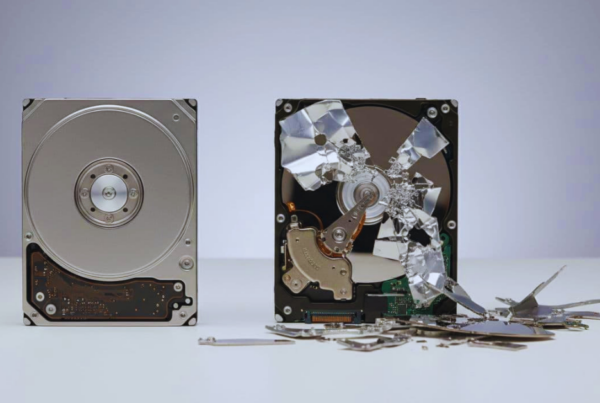
Match method to device type and risk. Use secure wiping when reuse is allowed and the media supports it. Use degaussing or shredding for higher-risk drives, failed drives, or when policy requires destruction. Physical destruction also makes sense for devices with embedded storage you can’t reliably sanitize.
Ask your vendor for reporting that ties destruction back to serial numbers whenever possible. For Washington-focused context on data destruction and state compliance themes, review this Washington State data destruction and e-waste laws overview.
Partner with a local certified recycler, then lock in documentation and sustainability results
Even the best internal process breaks down if the pickup and downstream handling are unclear. A year-round healthcare device recycling program needs a partner that can support recurring routes across western Washington, including Seattle, Bellevue, Tacoma, Everett, Silverdale, and Olympia.
Start with certifications and security posture. Then get very picky about documentation, because paperwork is what turns “we think we did it right” into “we can prove it.”

What “certified” should mean for your recycler and transporter
“Certified” should be more than a logo on a website. Ask for proof of electronics recycling certifications (often R2v3), secure chain of custody controls, and clear downstream accountability for where materials go.
Also confirm how transport works. Locked trucks or sealed containers, documented transfers, and trained staff lower your exposure. If a vendor may handle ePHI during transport or processing, put a Business Associate Agreement in place.
Regular scheduled pickups lower risk compared to end-of-year purges, because devices spend less time sitting in uncontrolled spaces. If you’re comparing program approaches, this medical device recycling best practices article offers helpful examples of how facilities build consistent routines.
Turn certificates and reports into an easy audit folder, and measure the green impact
Make documentation a deliverable, not an afterthought. Your “audit folder” should include: pickup dates, who released items, who received them, an itemized asset report, and certificates (certificate of destruction for data-bearing items, plus recycling documentation when available).
For retention, many organizations use three years as a practical baseline for certain waste records, but your best move is aligning to internal compliance and legal retention rules.
Finally, track environmental outcomes you can explain in plain language: landfill diversion, batteries captured, and materials recovered (when reported). Besides ESG reporting, it reduces the chance of toxic components leaking into the environment.
If you want this to run without constant rescheduling, set up a recurring agreement with Living Green Technology for healthcare electronics recycling services, so pickups, reporting, and certificates happen on a predictable cadence.
Conclusion
One-off device purges create blind spots, because they compress too many decisions into one week. A year-round program rests on three pillars: a lifecycle policy staff can follow, asset tracking plus consistent data destruction, and a certified recycler that delivers strong documentation. When those pieces work together, HIPAA e-waste compliance Washington becomes a routine process, not a scramble.
For western Washington facilities in Seattle, Bellevue, Tacoma, Everett, Silverdale, and Olympia, start with a pilot unit or a monthly pickup schedule. Then expand once reporting and chain of custody feel solid. When you’re ready, set up a recurring healthcare device disposal agreement with Living Green Technology to keep retirement predictable all year.