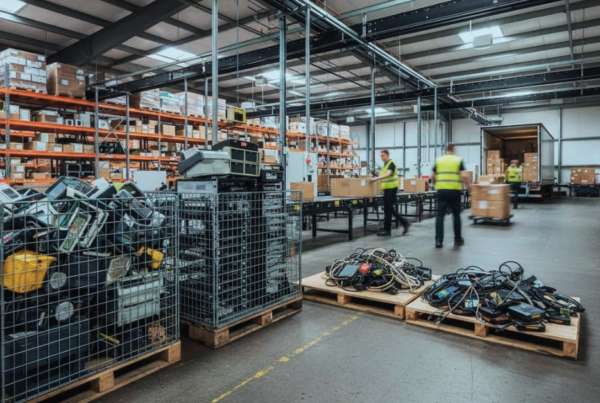

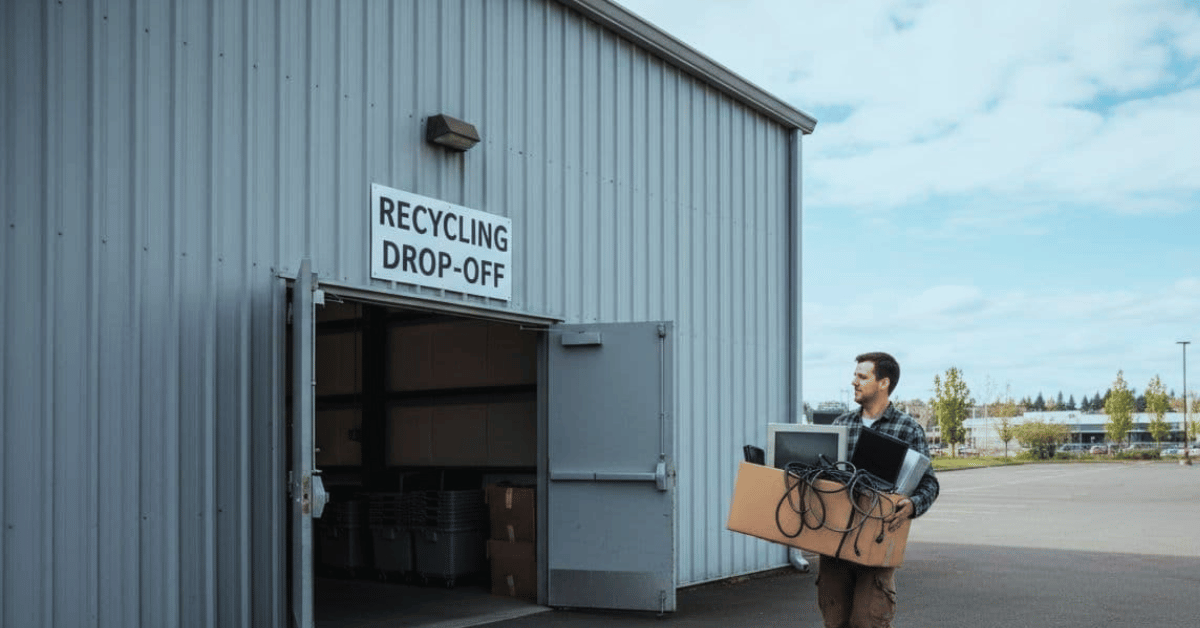
Nonprofits in Seattle, Bellevue, and Tacoma run on tight budgets. Yet old laptops, printers, phones, and cables still pile up in closets. Sometimes they sit there for months or years because disposal feels complicated or expensive.
The good news is that free electronics recycling exists across Greater Seattle. Living Green Technology (LGT) offers no-cost drop-offs and supports secure handling for data-bearing devices. That means less clutter, lower risk, and an easier way to stay true to your mission.
If you want the simplest next step, keep this in mind: find the nearest LGT drop-off location and bring your devices today. Seattle and Bellevue both have drop-off options, and Tacoma-area groups can use the Auburn site and ask about pickups.
How to recycle nonprofit electronics for free with Living Green Technology in Greater Seattle
Think of end-of-life electronics like old files in a cabinet. If you never clear them out, the cabinet gets jammed, and sensitive info sticks around longer than it should. A consistent recycling routine keeps your space usable and your risk lower.
LGT’s process is designed to be walk-in friendly for drop-offs, which is why many teams treat it like an errand, not a project. For organizations with larger volumes, it’s also worth asking about business pickups, especially after a tech refresh or office move.
Here’s a practical way to plan your trip for free electronics recycling in Seattle nonprofits can actually stick with:
- Collect devices in one secure spot: Choose a locked office or a supervised storage room.
- Sort by type: Put laptops together, printers together, and cables in a box.
- Separate “data devices” from accessories: Anything with storage (laptops, desktops, servers, phones) deserves extra attention.
- Bring items during posted hours: Hours can change seasonally, so confirm before you drive.
- Ask for documentation if you need it: Some grants and contracts require proof of destruction or disposal.
A simple habit helps most: schedule a quarterly “tech closet clean-out” and tie it to your normal operations calendar.
Choose the closest drop-off: Seattle, Bellevue, or Auburn (for Tacoma-area nonprofits)
Below is a quick location guide based on LGT’s posted details as of March 2026. Before you load up the van, confirm hours and any special instructions on the official page for Nonprofit electronics recycling in Seattle and Bellevue.
| Area you serve | Closest drop-off | What to know before you go |
| Seattle | 3417 Evanston Ave N, Suite 224 (Saturn Building) | Park in the lot behind the building, enter via the archway, use the keypad and dial 224, then knock at Suite 224. Walk-ins welcome. |
| Bellevue | Office Park Plaza, Suite 106 (near Seattle Children’s Clinic) | Knock at Suite 106. Check hours first, and don’t leave items in the hallway. |
| Tacoma area | Auburn HQ | There isn’t a dedicated Tacoma drop-off listed. Use Auburn and call ahead to confirm the best option, or ask about a pickup. |
Don’t leave items unattended outside a building or by a door. Besides safety concerns, it can also break building rules and create a mess for neighbors.
What to bring, what is accepted, and quick prep so drop-off is easy
Most nonprofits can clear a lot of space with one trip. Common drop-offs include desktops, laptops, monitors, printers, phones, tablets, cables, routers, and other small electronics.
A few limits matter when you’re planning:
- TVs are only accepted at the Auburn HQ, not at bin-style drop locations.
- Lightbulbs, AA/AAA batteries, and large appliances are not accepted, so keep them out of your donation pile.
Prep doesn’t need to be perfect, just consistent:
- Gather power cords if you have them (helpful, but not always required).
- Remove external drives or flash media you still need.
- Label devices if they belong to different programs or sites.
- Keep a simple inventory list for your records (even a one-page spreadsheet works).
You may also see searches like “donate old computers Bellevue,” and sometimes donation is the right call. If a device still works, is recent enough to be useful, and you can verify secure wiping, donation can extend its life. For example, InterConnection’s electronics donation program focuses on reuse and community access. On the other hand, if devices are very old, broken, or you can’t confidently wipe them, recycling is the safer, cleaner option.
Why free nonprofit e-waste disposal matters more than saving money
Free drop-off is a budget win, but it’s not the whole story. Electronics recycling also protects the people you serve and signals that your organization takes stewardship seriously.
Many nonprofits store sensitive details across years of program work. Meanwhile, old devices can sit in shared closets where volunteers rotate in and out. That’s not a trust risk you want to carry.
There’s also the bigger environmental picture. Electronics contain materials that don’t belong in landfills. When they’re recycled responsibly, more of those materials get recovered and used again, which reduces the need for new mining and manufacturing.
Data risk is real for nonprofits, even when the mission is good

Old devices can still hold donor lists, client notes, saved passwords, email threads, and financial files. Even “nothing fancy” organizations often have more private data than they think.
Deleting files or doing a factory reset isn’t the same as secure erasure. Data can remain recoverable, especially on older drives. Because of that, ask direct questions before you hand anything off:
- Do you provide secure wiping to recognized standards (often referenced as NIST or DoD methods)?
- What happens when a drive fails and can’t be wiped?
- Can you provide chain-of-custody tracking if needed?
- Will you issue a certificate of destruction for audits, grants, or compliance?
If a funder or partner ever asks, “How do you dispose of client data?” a certificate of destruction can turn a stressful scramble into a calm, one-page answer.
Keeping electronics out of landfills protects the community and stretches resources
Electronics are a mix of useful materials and problematic ones. Some parts can contain toxic substances, while others contain metals and plastics worth recovering. Recycling keeps hazardous materials out of soil and water, and it also reduces pressure on raw material supply.
Reuse is even better when it’s realistic. If a laptop still has life left, keeping it in service supports digital access goals and reduces the footprint of making a new device. That’s why many Seattle-area groups look at refurb and reuse options too, such as PCs for People in Seattle.
Still, a lot of the region’s “closet tech” can’t be reused safely or cost-effectively. In those cases, responsible recycling is the right finish line. LGT also points out that only a small share of total e-waste gets recycled, which is one more reason your nonprofit’s routine matters.
A quick action plan for Seattle, Bellevue, and Tacoma nonprofits to recycle devices this week
If you’re juggling events, payroll, and program delivery, you need a plan that feels like a handoff, not a new initiative. This one works for a small staff team or a volunteer crew, and it fits nonprofit e-waste disposal Tacoma organizations often struggle to coordinate.
Assign roles, track items, and protect privacy before anything leaves your building
Use this simple five-step workflow:
- Pick a coordinator (ops manager, office admin, or trusted volunteer lead).
- Collect devices in one secure spot and stop “closet drift.”
- Create a basic inventory (device type, brand, serial number if easy, and program owner).
- Remove and store anything you still need, like external drives or paper files tucked in a laptop bag.
- Decide which devices need documentation, such as certificates of destruction for grants or regulated programs.
Storing old devices for months increases risk and eats up space. A short deadline, like “by Friday,” helps the pile finally move.
Make it a repeatable habit, align it with your values, and share the win
Build this into normal operations instead of treating it like a rare cleanout. For example, tie electronics recycling to offboarding, annual inventory, or a quarterly refresh. A one-page internal policy helps too, especially around who approves data destruction and who keeps certificates.
After you drop everything off, share the result in a grounded way. Mention the cleared storage space, safer handling of sensitive data, and reduced waste. Board members and donors like seeing good stewardship, as long as it’s shared with humility.
Most importantly, don’t wait for the pile to become unmanageable. Find the nearest LGT drop-off location and bring your devices today.
Conclusion
Free drop-off recycling can turn a dusty tech closet into usable space again, without adding cost to your budget. Just as important, a secure process protects donor and client privacy, which protects your reputation. Finally, reuse and responsible recycling keep harmful materials out of landfills and put valuable materials back into circulation.
If your nonprofit serves Seattle, Bellevue, or Tacoma, you’re close to an easy option. Find the nearest LGT drop-off location and bring your devices today.