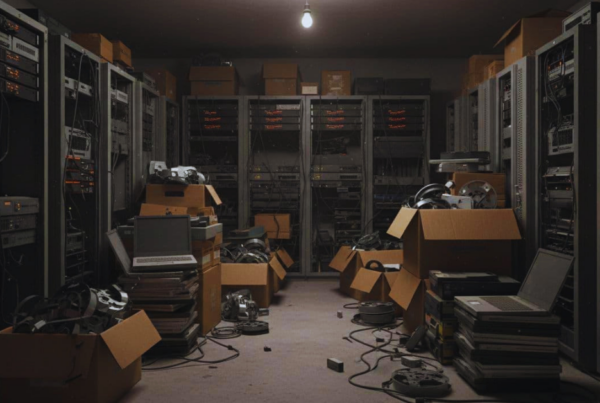


Summer in Western Washington has a familiar rhythm for school district teams. Buildings empty out, crews move fast, and pallets of Chromebooks, laptops, tablets, monitors, and tangled peripherals start leaving classrooms and carts. The calendar looks generous, until you realize how many competing projects share the same tight window.
That’s why school district device disposal summer work isn’t a simple “haul it away” task. High volume meets limited staff, and every device can still hold sensitive records. If you’re trying to run a Chromebook recycling program, Washington districts can repeat, or a PC laptop recycling program, Washington schools can trust, the partner you choose matters as much as the plan.
The core promise of a certified recycler is speed with safeguards: a clear chain of custody, verifiable student data destruction schools can stand behind, and responsible recycling. Summer is peak season, but the best programs also support year-round pickups for mid-year refreshes, emergency storage relief, and surprise break-fix retirements.
Summer cleanouts create volume problems that can derail a district fast
A summer cleanout often starts with good intentions and a few empty rooms. Then the devices show up. Not in neat batches, either. They arrive by building, by grade, by program, and sometimes by whatever a custodian could wheel down the hall.
Meanwhile, summer school might still be running. Offices may be under construction. Storage space disappears fast. If devices sit too long, they become a safety issue and a scheduling headache, especially when you need rooms back for August prep.
Ad hoc disposal makes it worse. “Let staff take what they want,” “donate to a local group,” and “sell the rest at surplus” sounds helpful, but it creates extra sorting, inconsistent tracking, and unclear data handling. When the pressure is on, chaos grows in the gaps between IT, facilities, and purchasing.
If you want a process that holds up next summer too, it helps to anchor your plan to a partner built for education work, like secure Chromebook disposal for districts that combines pickup logistics with documented data destruction.
The bottlenecks districts run into with Chromebooks and laptop refreshes
Most districts don’t retire one clean fleet. They retire a mix.
Some devices work but are slow. Others have cracked screens, dead batteries, or missing keys. Chargers and cases separate from devices. Asset tags don’t match what’s in the spreadsheet, because carts got swapped during the year. Even “simple” verification turns into hours of hands-on checking.
One-to-one programs make the pile bigger overnight. A single refresh can mean thousands of endpoints moving at once, often across multiple sites. As a result, teams lose time to tasks that don’t improve learning, like counting bins, matching serials, and sorting “recycle vs. redeploy” under deadline.
A planned Chromebook recycling program Washington districts can repeat reduces the scramble. The same goes for a PC laptop recycling program Washington schools can run without reinventing the workflow each summer.
Why chain of custody matters when equipment sits in hallways or storage rooms
When devices stack up in open areas, risk rises with every day. Someone can walk off with a laptop. A box can get mislabeled. A pallet can be moved without anyone knowing who did it.
Chain of custody is the simple idea that you can prove where devices were, who handled them, and what happened next. A certified partner supports that with practical steps: sealed containers or wrapped pallets, clear labels tied to your inventory practices, scheduled pickups, and documentation that aligns with how districts already track assets.
If you can’t explain “who had it when,” you’ll struggle to prove “what happened to the data.”
Student data has to be permanently destroyed, not just deleted
A factory reset feels final, but it’s often not the same as permanent destruction. Student information can live in unexpected places, and some storage can be recovered with the right tools.
FERPA sets the expectation that districts protect education records and personally identifiable information through the full device life cycle, including end-of-life. During bulk retirement, the safest approach is to treat disposal as a privacy project, not a recycling errand.
That’s where student data destruction schools can verify becomes the center of the plan. Many districts look to NIST SP 800-88 Rev. 1 as the go-to standard for media sanitization and destruction because it focuses on outcomes, meaning the data can’t be recovered.
FERPA pressure points during bulk device disposal
The risk isn’t limited to obvious files. Student names, IDs, and contact details can show up in cached browsers, local downloads, synced folders, and exported reports. Special program notes, accommodation plans, and discipline records may appear in attachments or local copies created during troubleshooting.
Admin tools can add another layer. Devices used by staff may include saved credentials, remote management artifacts, or logs that hint at student identities. Even when a student device is mostly cloud-managed, there can still be local remnants worth treating as sensitive.
The practical challenge is scale. During school district device disposal summer projects, you’re not validating five devices, you’re validating five hundred, or five thousand. That’s why districts need a repeatable method and proof that matches the batch.
What “NIST SP 800-88 compliant” can look like in the real world

In day-to-day district terms, NIST-style sanitization often comes down to choosing the right method for the media and the risk level:
- Certified wiping: Software-based sanitization (often overwrite or cryptographic erase, when supported) that aims to make data unrecoverable while keeping the device usable for resale or reuse.
- Degaussing: A method used for magnetic media that disrupts the magnetic field, making the data unreadable (not used for SSDs).
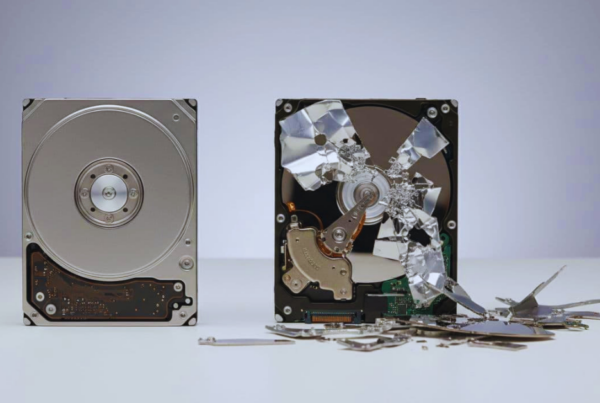
- Physical shredding: The most direct route for drives and media that must be destroyed. It permanently eliminates the storage device itself.
What matters is the documented result. Districts should be able to request a certificate of data destruction when needed for audits, policies, or board reporting. When available, serial-number level reporting is even better because it ties the outcome to each asset record. For a plain-English breakdown of the NIST approach, see NIST 800-88 Clear, Purge, Destroy.
What a certified recycler does that a “quick donation” cannot
Donations and informal resale can feel community-minded, but they often fall apart on two points: traceability and data certainty. Once devices leave your custody without documented sanitization, it’s hard to prove they were handled correctly. It’s also hard to answer basic questions later, like which batch went where, and what happened to the drives.
A certified recycler focuses on outcomes that districts can defend: secure handling, auditable processes, and responsible downstream recycling. That includes keeping hazardous components out of landfills and recovering metals so fewer raw materials are mined and processed.
This matters even in places with manufacturer-funded recycling options. “Free recycling” doesn’t automatically mean “secure recycling.” Districts still own the privacy risk, and they still need proof.
A clear bulk pickup process that fits school schedules
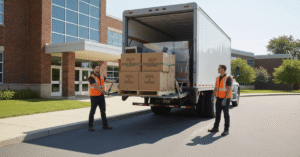
A good bulk process should feel more like a scheduled facilities job, not an IT fire drill. In practice, it often looks like this:
First, teams set a planning call in late spring to match pickup timing to building access and staffing. Next, the recycler provides simple staging guidance so devices move into sealed, labeled pallets or containers that fit your inventory workflow. Then pickup day runs on a schedule, with secure transport from each site.
After that, the recycler performs NIST-aligned data destruction (certified wiping, degaussing where appropriate, and physical shredding when required), followed by recycling or resale decisions based on condition. Finally, the district receives reporting and any requested certificates.
For Western Washington districts, Living Green Technology supports this exact rhythm. They handle bulk school pickups and can plan around summer timelines, while also offering year-round service for mid-year breakouts and ongoing refresh cycles. If you want another perspective on building a calendar-based refresh plan, the summer device refresh playbook shows how other K-12 teams structure inventory and retirement work.
Environmental wins your district can share with your community
Electronics contain materials that don’t belong in dumpsters. When devices break down in landfills, harmful substances can reach soil and water. Recycling also recovers usable materials, which reduces energy use compared to making the same materials from scratch.
A certified program gives you cleaner messaging because it’s backed by process and documentation, not just good intentions.
What happens to devices after pickup? Devices are securely transported, data-bearing media is sanitized or destroyed, then equipment is routed for responsible reuse or material recovery based on condition and policy.
Those are the kinds of details families and board members appreciate, especially when they ask where retired student devices end up.
Conclusion
Summer cleanouts move fast, and the volume can bury even strong teams. At the same time, student information requires verifiable destruction, not a quick reset, and districts need proof through NIST SP 800-88 methods like certified wiping, degaussing, and physical shredding.
Plan your summer tech clean out with Living Green Technology we handle bulk school pickups (Western Washington). Year-round pickups are also available for ongoing device turnover and storage relief.